The standards and foundations for nation-wide e-health solutions in Australia have now mainly been completed, according to National E-Health Transition Authority (NEHTA) CEO Peter Fleming, leaving implementation on the agenda for 2009.
The standards and foundations for nation-wide e-health solutions in Australia have now mainly been completed, according to National E-Health Transition Authority (NEHTA) CEO Peter Fleming, leaving implementation on the agenda for 2009.
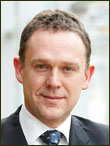
Peter Fleming (Credit: NEHTA)
"I've actually been pleasantly surprised at a lot of the work
that's been done in the background around foundation standards.
We're actually starting from a very good position," Fleming told
ZDNet.com.au. in an interview last week.
"The reality is, though, that we have to move very
quickly into a delivery mode and that means implementing. In my
expectation, well, this is the year of delivery for NEHTA."
NEHTA had an "absolute mandate" from the Council of Australian Governments (COAG) to deliver in
individual healthcare identifiers (which link electronic medical records together), Fleming said, which the authority
has been working together with Medicare on. "Medicare is
extraordinarily well positioned to do this because of its history
and very keen to make this work," he said.
Although creating the individual healthcare identifier for Australians meant a
"fairly substantial database", Fleming said the difficulties were
created by non-technical issues. There were privacy issues, work
flow issues and overarching consumer and government requirements,
he said. Legislative changes would also have to be made.
This year would also see a number of pilots, according to
Fleming. "I am expecting that as the year progresses we will move
very quickly around some fairly reasonable scale pilots around
medication management and discharge referrals, and we are talking to a
number of groups about that at the moment," he said.
Those waiting for an all-at-once implementation would go home
disappointed, however. NEHTA would move ahead incrementally,
Fleming said, with the authority consulting states, peak bodies and
vendors along the way.
NEHTA had been criticised in late 2007 in a Boston Consulting Group
review for a lack of external stakeholder involvement.
Fleming said that the
recently formed stakeholder forum had borne
fruit, with stakeholders feeling more involved.
It's not as though we're speaking to
1,000 suppliers.
Peter Fleming, NEHTA CEO
The stakeholder forum has met on a number of occasions, with the
last time being late December, he said. Working groups of stakeholders have
been created to take part in each of the major projects.
Fleming said that the authority has also been working closely with CIOs from state and territorial governments. The states had the "absolute
intent" of following NEHTA standards with any projects they conducted, he said.
As for the disparate systems existing across the nation already,
Fleming said it was unusual for any organisation of substance to
find themselves in a greenfield scenario where they were starting
from scratch, but that the number of different systems in health
was actually relatively small.
"In the hospital environment there literally are a handful of
systems," Fleming said. "It's not as though we're speaking to
1,000 suppliers."
Vendors had been helpful, he said, with an "absolute
acceptance" that they needed to work together towards NEHTA's
"wonderful world". Many of the vendors' systems were not
competing, Fleming said, instead vying for different segments of the
market.
As for available hardware in the hospitals, Fleming said that
NEHTA knew there was a lot of equipment out there which wasn't
going to be refreshed overnight. Yet he believed a workable
backbone was there.
NEHTA itself has seen a recent refresh of top level employees.
Fleming himself has only held the
CEO position for a few
months and is working with a
relatively new chairman, a change of CFO and a new
leader in the IT space — Dr Andy Bond as chief architect.
The former chief architect Mark Gibson moved to GP Partners last September.
Fleming was happy with his team, and looked to 2009 with anticipation.
"It's an extraordinarily exciting place. It's an exciting
time," Fleming said. "We've got amazing support from the key
stakeholders. I think everyone is saying this is something that
needs to be done."