First iPhone antivirus app released

Paris-based computer security firm Intego late last week said it had released the first antivirus software for Apple's iPhone handset.
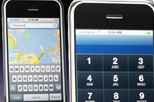
The company said the latest version of its Virus Barrier X5 10.5.3 antivirus package for Mac OS X, released last week, was also able to scan the iPhone for viruses.
The antivirus software runs from a user's Mac, not from the iPhone itself, and checks for viruses on the iPhone when the handset is plugged into a users' Mac. Files stored on the iPhone are copied to the Mac for a security check.
Intego claimed that because Apple was allowing third-party developers to create applications for the iPhone by using Apple's Software Developers Kit (SDK), there was a risk of installing applications that could harm these devices, or take control of them.
"With the release of the iPhone 2.0 software, and the ability to add applications, users are facing new vectors of attack," said Laurent Marteau, Intego's CEO. "It is essential that we not only protect Mac users from malware, but also protect their iPhone and iPod Touch at the same time."
However, just one piece of malware for the iPhone has so far been publicly reported.
Antivirus vendors have predicted the arrival of the iPhone, with its stripped down version of Mac OS X, would lead to an increase in malware for all Mac OS X systems. However, that prediction has not been realised yet. The malware count for OS X still remains relatively low, with blacklists of malware no more than 100 long for most Mac OS X antivirus software.
Despite this, other security vendors agree with Intego that Apple's move to open up the iPhone for third-party developers could lead to malware threats for iPhone users. Antivirus company F-Secure has not received any reports of malware for the iPhone, according to Fei Wing Chia, a security response manager for the company, however, he said Apple's AppStore will likely be hijacked by malware writers.
"Since the iPhone SDK is easily accessible for all, developing applications for the iPhone has never been easier," he told ZDNet.com.au.
Intego is not the first to release an iPhone antivirus. A proof of concept leaked from McAfee in May. McAfee spokesperson Joris Evers confirmed the leak of its software after an Apple fan website published users' experience of it.
"At the time, we were working on technology for the new platform — in this case, it was just a test to validate the technology for the iPhone," Allan Bell, McAfee's Asia Pacific marketing director said.
Sophos' Asia Pacific head of technology, Paul Ducklin told ZDNet.com.au that Intego's product was not really scanning the iPhone.
"If the file has to be moved to your Mac or your PC first, then you aren't really scanning the device, you're just scanning by proxy and reactively, since the file has to be on the device first," he said.
"Of course, if you always download apps onto your Mac or PC before transferring them onto your device, then the on-access scanner in your desktop PC's antivirus gets a chance to vet those files first," he said.