Defence powers up CIO role

The Department of Defence has flagged plans to significantly beef up the powers of its chief information officer role as part of a wide-ranging review that culminated in the release of its Defence White Paper 2009 over the weekend.
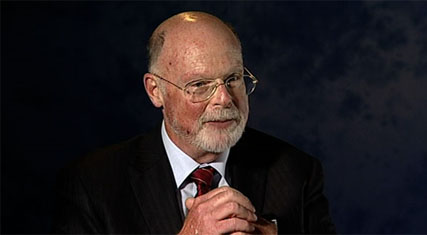
Defence CIO: Greg Farr
(Credit: Australian Defence)
"The chief information officer will become the coordinating capability manager for all Defence ICT," Defence stated in a section of the whitepaper devoted to envisioning the future of Defence's ICT capability.
Most of the responsibility for Defence's ICT environment currently sits with its CIO Group, led by Greg Farr, but other divisions — such as the Defence Material Organisation — are also involved in various aspects.
Defence has at times wrestled with its ICT architecture over the past decade. Many of the changes flagged in the 2009 whitepaper reflect concerns raised in the 2007 Defence Management Review, which highlighted the fact at the time that Defence's Information Systems Division was only meeting 15 per cent of user demands.
Chapter 15 of the Defence White Paper 2009, entitled "Supporting the Australian Defence Force", outlines Defence's ambition to achieve a single operating environment at the desktop, social networking, faster communications networks, and the consolidation of Defence datacentres from 200 to fewer than 10.
The social networking platform Defence plans to introduce will enable personnel, regardless of their location, to share information with counterparts in Defence, government, industry and allied forces.
Desktops will also come equipped with secure voice and video functions in "most fixed and deployed locations". It is hoped commanders and strategists will gain a single view of battle zones through the so-called "Common Operating Picture" from sensors and various sources, while corporate data is hoped to be made more easily accessible.
It also gives the go ahead for the CIO Group to address communications problems caused by its multiple networks. At present two desktops are required for personnel to access both the Secure and Restricted Networks; however, Defence has been trialling a US-developed system to overcome this. "A typical desktop set-up, available to all Defence sites, will be a single screen connected to a wireless network that can display multiple security 'sessions'," the whitepaper states of the new approach.
The new centralised ICT governance model under Farr's leadership is expected to have long-term impacts on government decision-making regarding investments in IT. "This initiative in itself will ensure a more targeted approach to ICT investment, reduce risks and improve 'time to market' for the delivery of new ICT capabilities," the paper states.
Cyber warfare and information superiority
"Cyber warfare has emerged as a serious threat to critical infrastructure," Defence Minister Joel Fitzgibbon noted in the whitepaper's preface.
The government intends to boost Defence's cyber warfare capabilities with the creation of a Cyber Security Operations Centre that will sit within the Defence Signals Directorate and will be staffed with personnel from the Australian Defence Force and Defence Science Technology Operations.
"We must focus on developing capabilities that allow us to gain an edge in the cyberspace domain, and protect ourselves," the whitepaper states.
The whitepaper does not outline what the "highly classified" investments will be, but said they "consist of a much-enhanced cyber situational awareness and incident response cap". To achieve its goal to gain information dominance over potential enemies, the government intends to draw together Defence's various information stores, hoping to overcome the problem of "stove-piping" information.
"Defence will ensure that 'stove-piping' of information is eliminated and that the principle of 'need-to-share' (within sensible security constraints) becomes pervasive," the paper states.
The new centre will be designed to support national security goals, such as responding to attacks on critical private sector systems and infrastructure and will work in conjunction with the Attorney-General's Department, which leads e-security programs for government and the private sector, the Australian Federal Police and intelligence agencies.
Savings
ICT has been positioned as critical to $20 billion in savings the government hopes will be delivered under its Strategic Reform Program.
Proceeds from savings are intended to fill the resource gap left by falling tax revenues, and which are expected to be revealed at the upcoming 2009 federal budget. Fitzgibbon noted a basic timeline under which the first four years would deliver $3 billion in savings across Defence.
To achieve this end, the government said it had "made provision" for remediating Defence's "critical backbone", which included its ICT systems, warehousing, and physical facilities. A key component of the strategy is centralising support services and developing a new system to manage the department's skills allocation and needs.
"Through the introduction of an integrated workforce management system, Defence will make better use of the taxpayers' dollar by better matching the skills and competencies of its people to the jobs that need to be done," the paper states.